
 E-Paper


Oil supply from the Middle East rises sharply: What happens to crude prices next?
Middle East oil exports are rising as more crude moves through the Strait of Hormuz, but supply risks remain and could affect crude oil prices.

 Prefer HTon Google


Middle East oil exports have increased sharply in September, bringing oil flows closer to the levels seen before Iran shut down the Strait of Hormuz in March. The increase could reduce some pressure on global energy prices, according to oil analysts.
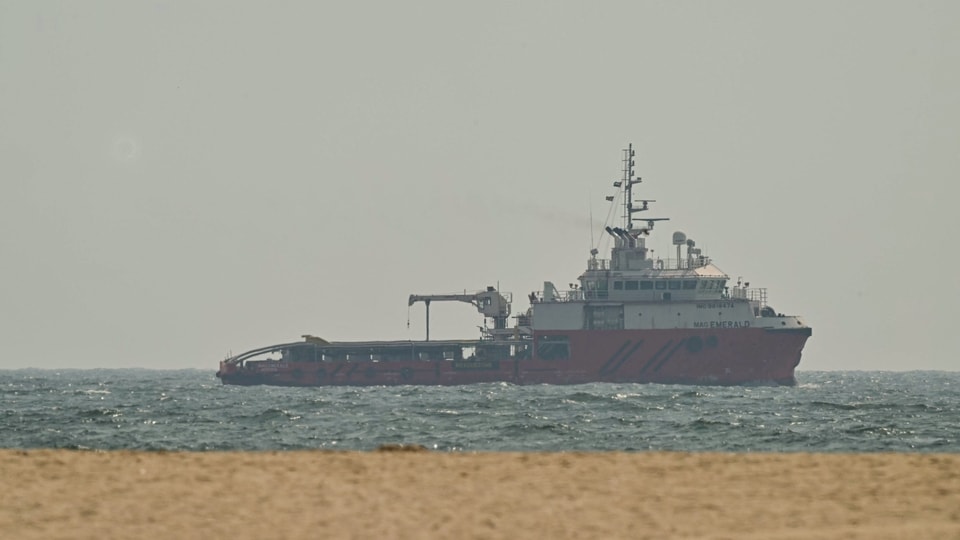
About 10 million barrels of oil a day passed through the Strait of Hormuz in September, according to Kpler, a company that tracks oil tankers. Another 6 million barrels of crude a day left the Persian Gulf states through pipelines and ports that avoid the strait, Kpler data showed.
Oil flows through Hormuz rise
Before the war with Iran began at the end of February, around 19 million barrels of crude left the region every day through the strait and other routes. However, analysts warned that tanker tracking is difficult, so the actual amount of oil moving through the region could be different, according to The New York Times.
Most experts agree that oil flows increased significantly in September, despite differences between tracking companies. The biggest recovery has happened through the Strait of Hormuz, even as Iran continues attacking tankers in the area.
US protects oil tankers
A US military operation to protect tankers appears to have encouraged major oil exporters to send more shipments through the strait, including Saudi Arabia and the United Arab Emirates. The New York Times reported this based on the situation in the waterway.
Also read: Why is oil price rising? Brent jumps 2.5% after Trump rejects Iran peace proposal
Oil shipments are increasing as shipping companies become more confident about using the strait. Eugene Gholz, an associate professor at the University of Notre Dame and an expert on the conflict, said exporters are getting a substantial amount of oil out and that the flow is increasing as shippers gain confidence, according to The New York Times.
Crude prices stay high
President Donald Trump, members of his administration and US military officials have repeatedly said the Strait of Hormuz is open and that tankers are continuing to move oil through the waterway. Some analysts believe the rising oil flows show that Iran may be losing control over the waterway. The US blockade has also stopped Iran from exporting oil on tankers in recent months, cutting an important source of revenue for the country.
Martin Navias, a senior research fellow at King’s College London’s Centre for Defence Studies, said the situation indicates that pressure is being placed on Iran rather than the United States, according to The New York Times. However, higher oil supplies have not brought crude prices back to prewar levels. Oil prices per barrel remain significantly higher than they were before the war.
Oil supply remains tight
Higher oil prices are also keeping gasoline and diesel prices elevated, putting pressure on consumers in many countries. The global oil market is still facing a supply shortage despite the recovery in Gulf exports. Dan Pickering, chief investment officer at Pickering Energy Partners, said global supply remains below what the world needs and described the market as still tight.
The 10 million barrels a day moving through the Strait of Hormuz is a major improvement from the early months of the war, when only a small amount of oil was getting through. But September's flow is still below the prewar level of about 16 million barrels a day through the strait, showing that oil shipments have not fully recovered. Different tanker-tracking companies are reporting different numbers. TankerTrackers.com estimated that about 7.4 million barrels of crude a day passed through the strait in September.
Oil trackers show higher flows
Daniel Sternoff, a senior fellow at Columbia University's Center on Global Energy Policy, warned against relying on just one tracking company's figure because the companies often produce different estimates, according to The New York Times. Even with the differences, the tracking companies all show the same broad trend: oil flows through the Strait of Hormuz increased in September, Sternoff said.
Also read: Why is SpaceX stock up 0.3% as Starship launch targets cheaper Starlink capacity?
Iran attacks could lift oil prices
The recovery in oil shipments could still be reversed if Iran increases its attacks. Experts warned that attacks on tankers or Gulf energy infrastructure could reduce supply again and push oil prices higher. A major Saudi Arabian oil pipeline that bypasses the Strait of Hormuz was shut down after being attacked this month, showing that alternative routes are also vulnerable.
Iran still has several ways to escalate attacks against oil shipments and energy infrastructure, according to Jim Krane, a fellow in Middle East energy studies at Rice University's Baker Institute for Public Policy. Krane said he believes Iran is currently holding back, according to The New York Times. There are also doubts about whether the Strait of Hormuz can truly be described as fully open. Oil is moving through the waterway in larger volumes, but shipping remains dangerous.
Strait of Hormuz still unsafe
The US military's protection of tankers requires major resources and may be difficult to maintain forever. The continued security risk also means some shipping companies remain unwilling to return to the route. Many tankers have still been attacked while trying to cross the waterway, even with US protection.
Arsenio Dominguez, secretary general of the International Maritime Organization, said the strait is not open to navigation because it is not safe. The organization said 85 ships have been attacked since the war began and 24 mariners have died, according to The New York Times.
Gulf oil exports recover
Gulf crude exports are now around 85% of their prewar level, according to Matt Smith, director of commodity research at Kpler. But Smith said this does not mean the oil market has returned to normal. Oil production still needs to increase and refineries need to restart or raise their output, Smith said. He added that this cannot fully happen until the safety risks of crossing the Strait of Hormuz are removed.
Tracking the exact amount of oil moving through the strait is difficult because many tankers switch off their transponders. They do this to avoid being easily identified by Iran. Tanker-tracking companies therefore use several sources to estimate oil flows. They combine transponder signals recorded outside the strait, satellite images and other information to identify which tankers crossed the waterway and how much oil they were carrying.
What happens to crude prices next?
A large oil tanker can carry around 2 million barrels of crude, making even a small change in the number of ships crossing the strait significant for global supply. The tracking companies recorded much lower flows in August than in September. Vortexa estimated that 6.4 million barrels a day passed through the strait in August.
Kpler estimated August flows at 5.9 million barrels a day, while TankerTrackers.com estimated 5.5 million barrels a day. All three companies showed that oil flows had already increased from the early months of the war in August, but the volumes were still less than half of the prewar level.
Also read: Stock market today: S&P 500, Nasdaq fall as yields rise and oil prices jump
US oil flow data questioned
The Trump administration and the US military have also said that more oil is leaving the region, but the shipment data provided by the government has not been consistent or complete.
Adm. Brad Cooper, head of US Central Command, said in a September 19 video that 1 billion barrels of oil had been shipped through the Strait of Hormuz in the previous “couple months.” If “couple months” meant exactly two months, that claim would equal more than 16 million barrels a day, roughly matching the prewar daily flow through the strait.
Central Command later gave a different interpretation of the timeframe. Capt. Tim Hawkins, a Central Command spokesman, said “the last couple” meant “a few” months. Hawkins did not provide the average daily amount of oil that had moved through the strait since May, leaving questions about how Central Command calculated its total.
The amount of oil claimed by Central Command has become a subject of debate in Washington. Some congressional Democrats and intelligence analysts have questioned whether the military has provided enough information about how its estimates were calculated.
Some officials and intelligence analysts, speaking anonymously, questioned whether Central Command's figures could be higher than the actual amount of oil moving through the strait. They suspected the command may have faced pressure from the White House to present higher estimates.
Central Command rejected those claims. Capt. Tim Hawkins said the facts released by the military about increasing oil flows through the Strait of Hormuz were based on its data, according to The New York Times. Hawkins said Central Command uses ship traffic information from its own operations, the shipping industry and Gulf states to calculate its oil-flow estimates.
Central Command said oil flows have increased even further in recent weeks. Hawkins said more than 13 million barrels of oil a day passed through the strait during the last two weeks. The US Defense Department also rejected the suggestion that Central Command was pressured to increase its estimates. Defense Department spokeswoman Kingsley Wilson said US service members would continue protecting commercial vessels moving through the strait.
Oil supply could push prices higher
For crude prices, the key issue now is whether the increase in Middle East oil shipments can continue. If flows keep rising and the security situation improves, more global supply could reduce some pressure on oil prices. But oil prices could rise again if attacks increase, tanker traffic falls or Gulf energy infrastructure is damaged. The recent attack on the Saudi pipeline shows that alternative oil routes can also face disruptions.
For now, September's data points to a clear recovery in Middle East oil exports, but not a full return to normal. The Strait of Hormuz is carrying substantially more oil than earlier in the war, yet flows remain below prewar levels and shipping companies still face major security risks. The next move in crude prices will therefore depend heavily on oil supply and safety in the region. A continued recovery in shipments could ease supply pressure, while renewed attacks could quickly tighten the market and push prices higher.


